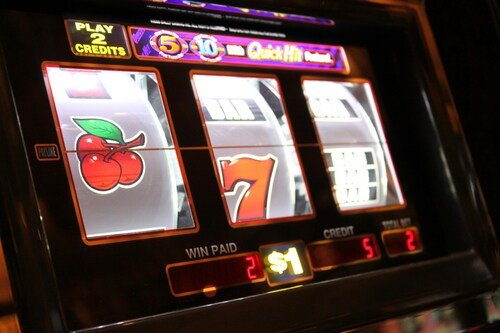
A $500,000 casino win is large enough to fund a full property purchase or a substantial down payment in most markets across the United States and Europe. Whether that money reaches a closing table intact depends on taxes, legal verification steps and the costs that stack up beyond the listing price. The path from casino floor to property deed is structured — and each step reduces or preserves the usable amount in specific, calculable ways.
What Happens to Casino Winnings Before You Can Spend Them
Gambling winnings in most jurisdictions are treated as taxable income in the year they are received. In the United States, a $500,000 casino payout falls into the top federal income tax bracket, which sits at 37% for 2025 for single filers earning above $609,350. After federal tax alone, a $500,000 win could be reduced to approximately $315,000 — before state income taxes are applied. Some states add between 3% and 13% on top of the federal rate, depending on where the winner resides. Unibet and other major casino operators are legally required to report large payouts to tax authorities, which means the paper trail begins the moment the win is recorded.
An anonymous winner who used a casino payout to fund a property purchase in 2023 described the process in a real estate forum: “I thought I had $500,000 to spend. After sitting with a CPA for two hours, I understood I had about $290,000 that I could actually move without creating new tax problems.” That recalibration is the first and most important step before any property search begins.
The legal process of using gambling winnings for real estate involves several sequential steps that must be completed before a buyer can present a credible offer:
- Receive official documentation of the win from the casino — typically a W-2G form in the US or equivalent in other jurisdictions
- File tax returns accurately for the year the win was received and pay the applicable tax liability
- Obtain a written record of the net amount remaining after tax obligations are settled
- Open or designate a bank account to hold the funds — most real estate transactions require funds to be held in a verified account for a minimum seasoning period
- Prepare a source-of-funds letter or statutory declaration that traces the money from the casino payout to the account
- Engage a solicitor or real estate attorney to review the documentation before it is submitted to a seller’s conveyancer
Skipping or mishandling any of these steps can delay or block a purchase entirely. Anti-money laundering regulations in most countries require that large cash sums — regardless of their legitimate origin — pass through a documented verification process before they can be used in a property transaction. This process typically takes two to six weeks.
Costs Beyond the Purchase Price That Affect the Final Budget
The listing price of a property is not the total cost of buying it. Real estate transactions carry a range of additional expenses that a buyer must fund from the same pool of money. For a $500,000 purchase in the US, closing costs alone typically range from 2% to 5% of the purchase price — adding $10,000 to $25,000 to the transaction before the buyer takes possession.
The most common costs that a cash buyer must account for beyond the sale price include:
- Closing costs — title insurance, escrow fees, legal fees and transfer taxes
- Property inspection fees — typically $300 to $700 depending on property size and location
- Property taxes — due at closing for the remainder of the current tax year
- Homeowner’s insurance — first year premium often paid at closing
- Maintenance reserve — industry guidance suggests budgeting 1% of the property’s value annually for upkeep
- HOA fees — applicable in condominiums and planned communities
- Moving and renovation costs — variable but frequently underestimated
For a buyer entering a transaction with exactly $315,000 in post-tax funds, a $300,000 property with full closing costs and a first-year maintenance reserve would consume virtually the entire available budget. Building a buffer of at least 10% above the purchase price is standard financial planning guidance for cash buyers in this position.
Residential Property Versus Investment Property as a Purchase Target
A buyer with $500,000 in casino winnings faces a meaningful fork in the decision: buy a home to live in or buy a property that generates income. Both paths are viable, but they carry different financial profiles, different tax implications and different demands on the buyer’s time and ongoing cash flow.
Buying a Home for Personal Use
A primary residence purchased with gambling winnings follows the same legal and financial structure as any other cash purchase. The buyer owns the asset outright, eliminates mortgage payments and builds equity in a single location. In markets where median home prices sit below $400,000 — which covers a large share of mid-tier US cities as of 2025 — a post-tax fund of $290,000 to $315,000 can support a full cash purchase with room for closing costs and a reserve.
The following table outlines how a post-tax casino windfall of $300,000 maps against representative residential markets in the United States:
| Market | Median Home Price (2025) | Closing Cost Estimate | Feasibility on $300,000 |
| Cleveland, OH | $125,000 | $3,750 – $6,250 | Full purchase with reserve |
| Memphis, TN | $175,000 | $5,250 – $8,750 | Full purchase with reserve |
| Phoenix, AZ | $385,000 | $11,550 – $19,250 | Down payment only — mortgage required |
| Austin, TX | $475,000 | $14,250 – $23,750 | Down payment only — mortgage required |
| Los Angeles, CA | $800,000+ | $24,000 – $40,000 | Partial down payment only |
Buying an Investment Property for Rental Income
Investment property introduces ongoing income but also ongoing responsibility. A single-family rental in a mid-tier market purchased at $200,000 with a post-tax fund of $300,000 leaves $100,000 available for a reserve fund, renovation and operational costs. Rental yields in mid-tier US markets averaged between 5% and 8% gross in 2024, meaning a $200,000 property could generate $10,000 to $16,000 per year in rent before expenses.
Buyers considering investment property after a casino win should evaluate the following factors before committing funds to a specific asset:
- Local rental demand and vacancy rates in the target area
- Property management costs if the buyer does not intend to self-manage
- Tax treatment of rental income in the buyer’s jurisdiction
- Capital gains implications if the property is sold within two years of purchase
- Insurance requirements specific to non-owner-occupied properties
Rental income from an investment property is taxed separately from gambling winnings, which means a buyer could face two distinct tax events in the same year if they purchase immediately after a large win. A tax advisor with real estate experience — not a general accountant — is the appropriate professional to consult before combining these two income events in a single calendar year.
Professional Guidance Before Closing
No buyer should move from casino win to property closing without building a professional advisory team. The intersection of gambling income, real estate law and wealth management involves at least three distinct areas of expertise that rarely overlap in a single advisor. Each professional addresses a specific and non-overlapping part of the transaction.
The advisors a buyer should engage — in order of priority — are:
- A CPA or tax attorney specialising in gambling income — to calculate the net post-tax amount and plan the timing of the purchase
- A real estate attorney — to review source-of-funds documentation and oversee the legal transfer of title
- A licensed real estate agent with cash buyer experience — to identify properties that accept cash offers and negotiate on timeline and price
- A wealth manager or financial planner — to assess whether tying the entire windfall into an illiquid asset serves long-term financial objectives
A $500,000 casino win is a finite sum. Once it is converted into property, access to that capital requires a sale or a loan against the asset — neither of which is immediate. Buying property with a windfall rewards buyers who plan in sequence, not in excitement.